I workout five days a week. I thought I was in the best shape of my life.
Then one night my wife rushed me to the ER because she thought I was having a heart attack.
I wasn't. They ran the tests, ruled it out, and then put me in a CT machine. That's when everything changed. It was 4am when a doctor came in and told me they'd found what looked like gallstones, and a large mass on my left kidney. Baseball-sized. He said the mass was probably cancer. The gallstones turned out to be cancer too.
I was 43 years old. I have a wife and three kids. And in a single sentence, at 4 in the morning under fluorescent hospital lights, my life split into before and after.
That level of overwhelming doesn't go away when you leave the ER. It follows you into every appointment, every scan result, every conversation with a doctor who has 12 minutes and a waiting room full of people.
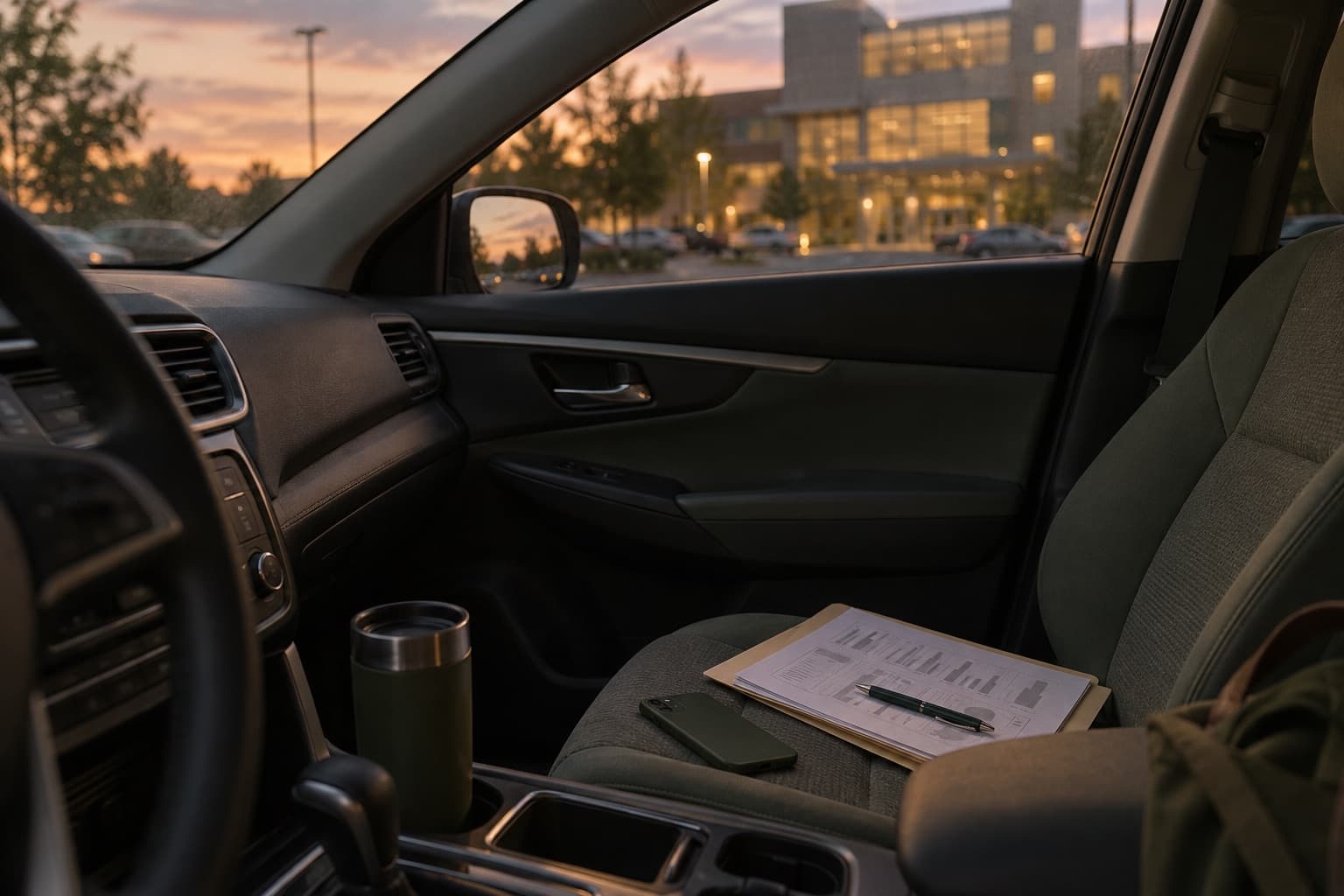
I remember sitting in the parking lot of Tennessee Oncology after my first oncology appointment, trying to reconstruct the conversation that had just happened. What did he say about the scan? What was the name of that drug? Did he say months or years? My wife was with me and we both sat there trying to piece it together like witnesses to an accident, each of us remembering different parts, neither of us sure we had the full picture.
That happened again at the next appointment. And the one after that.
Here's what nobody tells you about being a cancer patient: the disease is hard, but the system that's supposed to help you can be just as overwhelming. Appointments are 12 minutes long. Your doctor speaks in terms you've never heard. Your brain (which is already running on fear and adrenaline) is not recording properly. You go home with a stack of papers and a head full of half-remembered information, and you're supposed to make decisions from that.
I got creative out of desperation. I lived next door to a doctor, and I'd walk over to his house with my scan results and lab reports and sit at his dining room table while he explained what they actually meant. In plain English. Like a human being. That doctor at that table gave me more clarity in 20 minutes than I'd gotten from the system in months.
But most people don't have a doctor next door. Most people sit alone with a printout they can't read and a Google search that terrifies them.
I started recording my appointments on my phone. Then I'd sit in the car afterward and replay them. Then I started writing recaps for myself. Then I started feeding the transcripts into AI to pull out the key points, the follow-up questions I forgot to ask, the action items nobody assigned to anyone.
It worked. I started feeling like I had some control back. Not over the cancer (nobody controls that) but over my own care. Over the information. Over the conversation.
I thought: this shouldn't be a manual process I built for myself. This should just exist. Every patient should have this.
So I built it.
Bubo Health is the AI-powered health companion I wish I'd had from day one. It records your doctor visits and generates an instant recap: what was said, what to follow up on, what questions you forgot to ask. It keeps your lab results in one place and charts every test over time. It keeps your medications organized. It lets you ask anything about your health and get a real, thoughtful answer. It keeps your emergency health information ready the moment someone needs it.
I'm not a Silicon Valley founder. I'm not a doctor. I'm a patient, still in treatment, still going to appointments, still using this app every single week because I built it for my actual life.
That's the part I want you to hold onto: I didn't build Bubo because I saw a market opportunity. I built it because I was drowning and I needed a lifeline, and I had just enough technical skill to build one.
If you're managing a chronic illness (cancer, heart disease, diabetes, anything complex), you know exactly what I'm talking about. The feeling of walking out of an appointment and realizing you got less out of it than you should have. The frustration of having five different apps for five different things and none of them talking to each other. The loneliness of navigating a system that wasn't designed with you in mind.
Bubo was designed with you in mind. Because I am you.
I'm not a Silicon Valley founder. I'm not a doctor. I'm a patient, still in treatment.
Health from here.